
Southern Illinois Railroads and Transportation Innovation
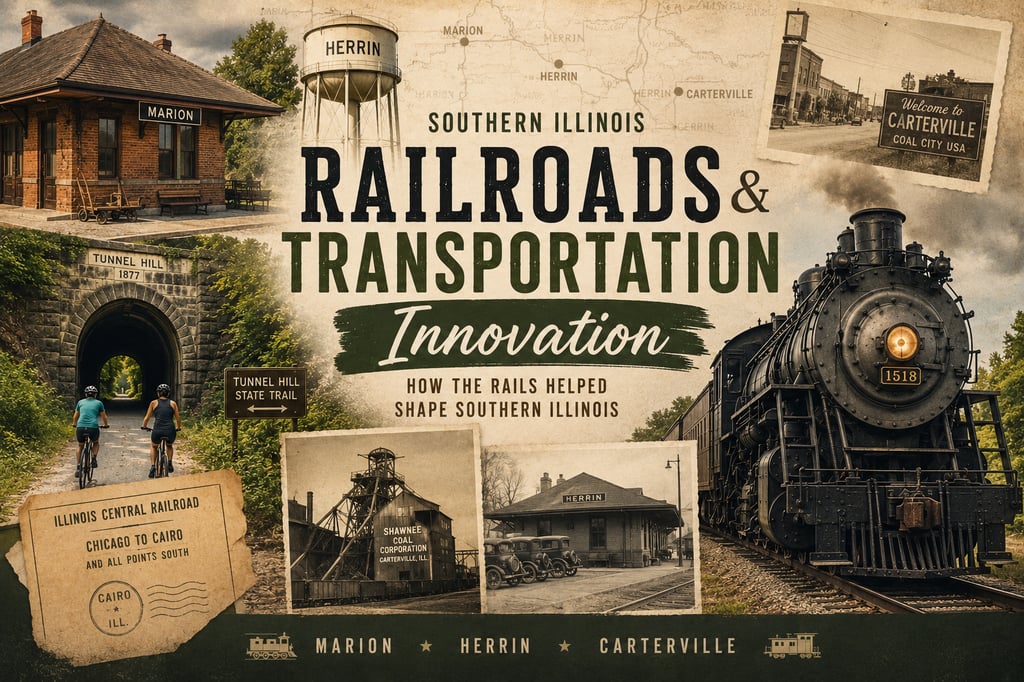
How the Rails Helped Shape Southern Illinois
When most people think about Southern Illinois, they probably picture hiking trails, wineries, small towns, or college towns like Carbondale. But something a lot of people don’t realize is that railroads basically helped build this entire region into what it is today.
Before highways and interstates connected everything, trains were the main way people, coal, crops, and supplies moved across the Midwest. Southern Illinois became a huge transportation hotspot because of its location between the Mississippi and Ohio Rivers and its connection to bigger cities like Chicago and St. Louis.
Honestly, without railroads, many Southern Illinois towns probably wouldn’t have grown the way they did.
The Railroad Boom Changed Everything
Back in the 1800s, railroads were spreading across the country fast, and Southern Illinois became one of the most important areas for transportation routes. One of the biggest railroad systems to come through the region was the Illinois Central Railroad, which connected Chicago all the way down to Cairo.
At the time, this was a huge deal.
Instead of taking days or weeks to transport goods by wagon or river, trains could move products much faster and way more efficiently. Farmers suddenly had access to larger markets, businesses started growing, and towns along the rail lines became busy centers for trade and travel.
Places like Carbondale, Marion, Herrin, and Cairo all benefited from being connected to major rail lines. Some communities were literally built around railroad depots and train schedules.
Coal Mining and Railroads Basically Went Hand in Hand
Southern Illinois has a massive coal mining history, especially around Williamson County, and railroads played a huge role in that industry.
Once coal mining started booming in the late 1800s and early 1900s, trains became the easiest way to move coal across the Midwest. Railroad lines were built specifically to connect mines to larger cities and industrial areas.
That growth brought jobs, businesses, restaurants, hotels, and new families into Southern Illinois towns. Communities expanded quickly because the railroads made transportation so much easier.
Carbondale especially became a transportation hub during this time. Railroads running through the city carried coal, crops, tobacco, and other supplies throughout the region. It helped turn Southern Illinois into an important economic center instead of just a rural area tucked away in the state.
The Tunnel Hill Railroad Still Exists…Kind Of
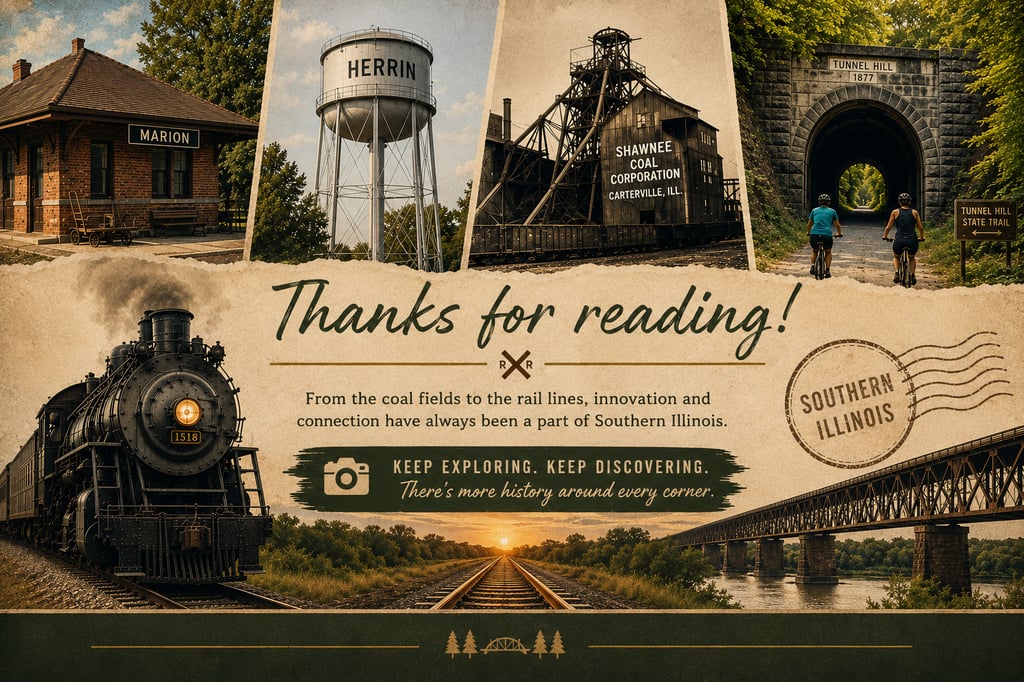
One of the coolest railroad stories in Southern Illinois is the old Cairo and Vincennes Railroad route, which eventually became what we now know as Tunnel Hill State Trail.
If you’ve ever visited Tunnel Hill, you’ve actually walked or biked along a former railroad corridor. The giant tunnel itself was built for trains back in the late 1800s and was considered a huge engineering accomplishment at the time.
Now, instead of steam engines running through the tunnel, it’s filled with hikers, bikers, and people exploring the trail.
Honestly, it’s kind of crazy to think that something built over 100 years ago for transportation is now one of the region’s most popular outdoor attractions.
Southern Illinois Was Still Using Steam Trains Into the 1980s
This is probably one of the wildest facts about Southern Illinois railroad history.
The Crab Orchard and Egyptian Railway, located in Williamson County, was reportedly the last railroad in the United States to regularly use steam locomotives for freight service all the way until 1986.
Not 1886….1986.
While most of the country had switched to diesel trains decades earlier, Southern Illinois still had working steam engines hauling freight through the area. Railroad fans from all over the country would come visit just to see them in action.
That alone shows how unique Southern Illinois railroad history really is.
Transportation Still Matters Here Today
Even though trains aren’t the center of everyday life anymore, transportation still plays a huge role in Southern Illinois.
Modern freight rail systems continue helping move products and supplies across the country, and many current rail lines still follow the same paths created over 100 years ago.
Amtrak trains still travel through parts of Southern Illinois today, connecting towns like Carbondale to larger cities like Chicago and Memphis.
And honestly, you can still see railroad history almost everywhere in the region. Old depots, rail bridges, converted trails, and historic downtowns all connect back to the transportation boom that helped Southern Illinois grow.
Why It’s Still Interesting Today
Railroad history might sound kind of random at first, but it actually explains a lot about why Southern Illinois developed the way it did.
The railroads helped create industries, grow towns, connect communities, and bring new opportunities into the region. Without them, Southern Illinois would probably look completely different today.
Plus, there’s just something cool about seeing old railroad tunnels, historic train depots, and tracks that have been around for generations. It’s one of those parts of local history that people drive past every day without realizing how important it actually was.
So next time you’re hiking Tunnel Hill State Trail, waiting on a train crossing, or exploring one of Southern Illinois’ historic towns, you’re looking at part of the transportation system that helped shape the Midwest.
For more Southern Illinois history, attractions, and local adventures, explore our website – VisitSI.